Lithium Polymer: The Industry Standard
Almost every commercial and consumer drone on the market uses lithium polymer (LiPo) batteries. They offer the best combination of energy density, weight, and discharge rate for electric flight. A typical LiPo drone battery stores enough energy for 25 to 45 minutes of flight depending on the aircraft, payload, and conditions. That has been the sweet spot for several years, and while incremental improvements continue, the fundamental chemistry has not changed dramatically.
LiPo batteries have well-known limitations. They degrade with each charge cycle, losing capacity over time. They are sensitive to temperature, performing poorly below 10 degrees Celsius and becoming dangerous above 60 degrees. They require careful storage at specific voltage levels. And they are a fire risk if punctured, over-charged, or exposed to physical damage. Every drone operator needs to understand and respect these characteristics.
Understanding Battery Specifications
Three specifications matter most when evaluating drone batteries. Capacity (measured in milliamp-hours, mAh) determines how long the battery can power the drone. Voltage (V) affects the power output and must match the aircraft's requirements. C-rating indicates the maximum safe discharge rate, which matters for high-performance manoeuvres and heavy payloads.
For most commercial photography drones, the manufacturer-supplied batteries are the correct choice. DJI's Intelligent Flight Batteries include built-in battery management systems that monitor cell health, temperature, charge cycles, and remaining capacity. Third-party batteries may offer cost savings but often lack these management features and can void your warranty and insurance coverage.
If you are flying a custom-built platform for specialised applications, battery selection becomes more critical. Higher C-rated batteries support aggressive flying and heavy payloads but typically have lower capacity for a given size. Lower C-rated batteries maximise flight time for steady, predictable operations like survey work and photography.
Maximising Battery Lifespan
How you treat your batteries directly affects how long they last and how reliably they perform. Store batteries at a storage charge level (typically 40-60% capacity) if you will not be using them for more than a few days. Never store batteries fully charged or fully depleted. Both extremes accelerate degradation of the internal cells.
Charge batteries in a cool, well-ventilated area away from flammable materials. Never charge immediately after a flight, as the cells are still warm and charging warm cells reduces lifespan. Let batteries cool to room temperature before connecting the charger. Similarly, do not fly with batteries that are below 15 degrees Celsius. Cold batteries deliver less power and can cause voltage sags that trigger emergency landings.
Track your charge cycles. Most commercial drone batteries are rated for 200 to 500 cycles before significant capacity loss. DJI's flight app tracks this automatically. Replace batteries that show swelling, damaged connectors, or reduced capacity below 80% of their rated specification. A failing battery in flight is one of the most common causes of drone incidents.
Emerging Battery Technologies
Solid-state batteries promise higher energy density, faster charging, better temperature tolerance, and reduced fire risk compared to LiPo. Several manufacturers are developing solid-state cells for drone applications, though commercial availability at competitive prices is still a few years away. When they arrive, expect flight times to roughly double for equivalent battery weight.
Hydrogen fuel cells are already in use in some commercial drone platforms, particularly for long-endurance applications like infrastructure inspection and agricultural monitoring. These systems offer flight times of two to four hours, far exceeding any battery-powered platform. The trade-offs are complexity, refuelling logistics, and cost. For specialised applications where endurance is the primary requirement, hydrogen is worth investigating.
Practical Battery Management for Commercial Operators
As a commercial operator, your batteries are a significant ongoing expense. A set of four DJI Inspire 3 batteries represents over $3,000 in consumables that will need replacing within 18 to 24 months of regular use. Budget for battery replacement as part of your operating costs, not as an unexpected expense.
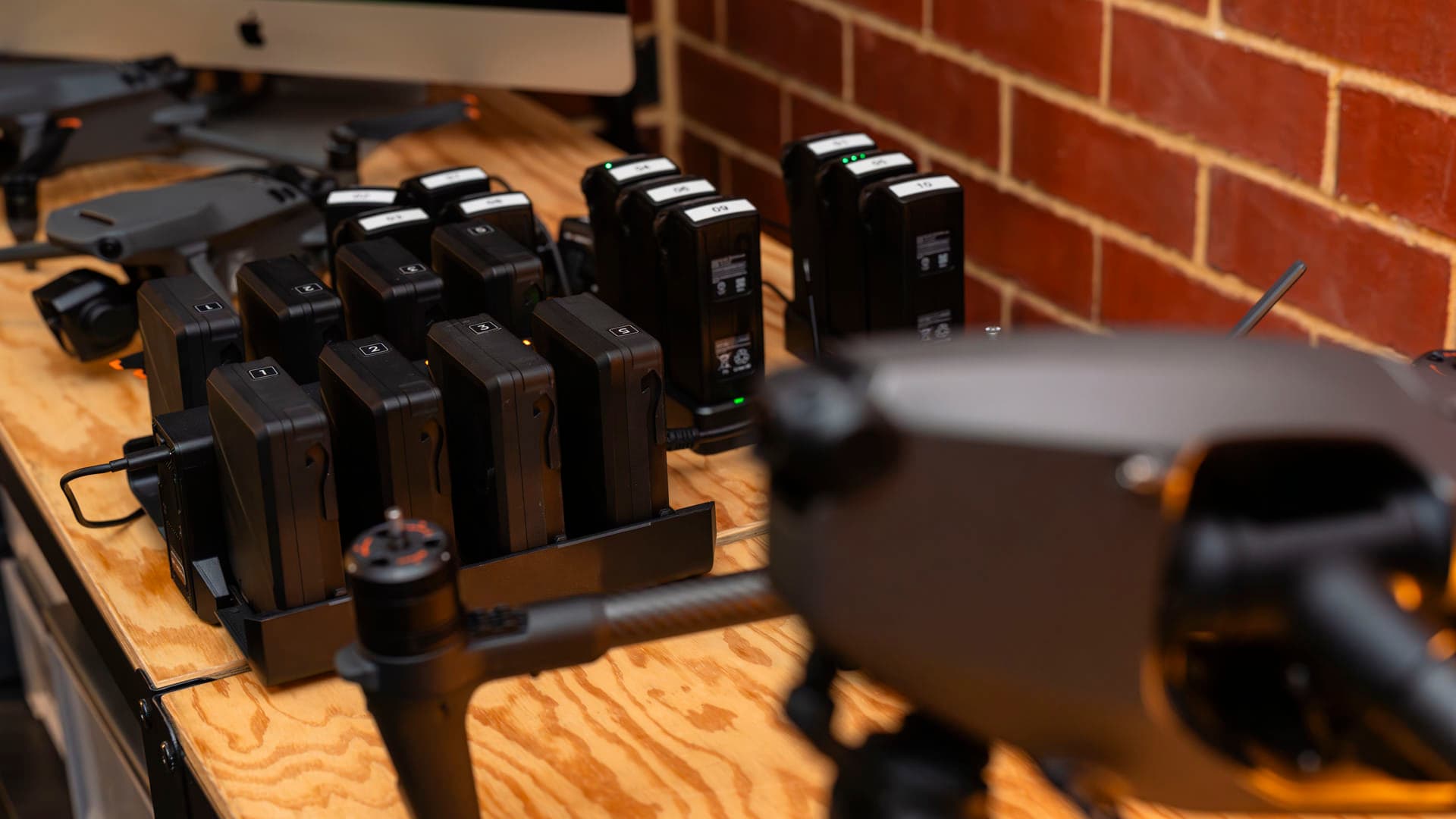
Maintain a battery log that tracks purchase date, charge cycles, observed capacity, and any anomalies. Rotate batteries evenly across your fleet so they wear at similar rates. Retire batteries conservatively. The cost of a new battery is trivial compared to the cost of a drone falling from the sky because a tired cell failed mid-flight. For more on operational best practices, read our guide on pre-flight safety procedures, or get in touch to discuss your aerial project requirements.