Safety Is Not a Checklist. It Is a Culture.
Every drone operator has a pre-flight checklist. The good ones actually use it. But safety goes beyond ticking boxes before takeoff. It is a mindset that runs through every decision, from accepting a job to packing up at the end of the day. In nine years of commercial operations, we have maintained a perfect safety record. That is not luck. It is discipline.
The drone industry in Australia is regulated by CASA, and for good reason. A drone falling from 100 metres is a projectile. It can injure people, damage property, and interfere with manned aircraft. Treating safety as an afterthought is not just irresponsible. It is the fastest way to lose your certification, your insurance, and your reputation.
Pre-Flight: Before You Leave the Office
Safety starts well before you arrive on-site. The planning phase is where most risks get identified and mitigated. Check the weather forecast for wind speed, gusts, precipitation, and visibility. Review the airspace classification using the CASA-approved OpenSky app or equivalent. Identify any NOTAMs (Notices to Air Missions) that might affect your operating area.
Conduct a desktop risk assessment for the site. Use satellite imagery to identify obstacles, power lines, trees, buildings, and terrain features. Note any populated areas, roads, or waterways near your planned flight path. If you are flying near controlled airspace, lodge your notification or approval request with the relevant authority well in advance. Same-day approvals happen, but do not count on them.
Prepare your equipment the night before. Charge all batteries, both drone and controller. Format memory cards. Update firmware if needed, but never update firmware on the morning of a critical shoot. Firmware updates occasionally introduce bugs. Test updates at least 24 hours before a job so you have time to roll back if something breaks.
On-Site Setup: The First 15 Minutes Matter
When you arrive on-site, resist the urge to start flying immediately. Walk the area first. Look up. Look around. Identify anything the satellite imagery missed. Construction cranes, temporary structures, wildlife, and other people. Confirm wind conditions match the forecast. A 15 km/h breeze at your feet can mean 30 km/h gusts at 100 metres altitude.
Establish a clear launch and landing zone. Mark it visibly if you are working on a busy site. Brief anyone on-site about your operations, including where they should and should not stand, what to do if something goes wrong, and who is in charge of the flight. On commercial sets, this briefing is mandatory under our operations manual. Even on small jobs, it takes two minutes and prevents misunderstandings.
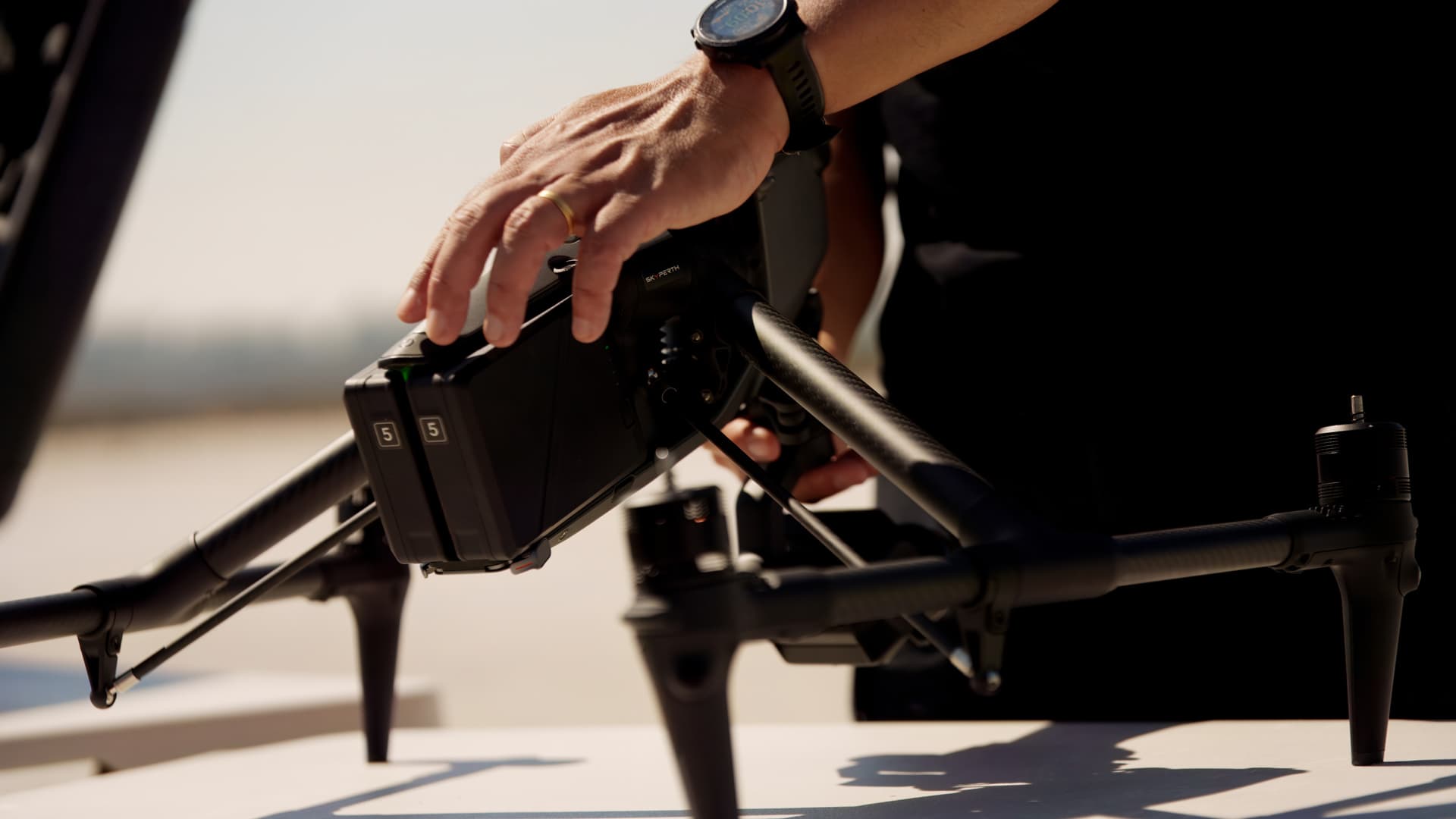
Run your physical pre-flight inspection. Check propellers for cracks, chips, or warping. Inspect the gimbal and camera for debris or damage. Verify the battery is seated correctly and the charge level matches what your controller reports. Power on the aircraft and controller. Wait for GPS lock. Check sensor calibration. Confirm the return-to-home point is set correctly.
During the Flight: Situational Awareness
Maintaining visual line of sight (VLOS) is a CASA requirement for standard operations. It is also common sense. If you cannot see your drone, you cannot see what is around it. Use an observer if the shoot requires you to focus on the camera feed for extended periods. On our maritime shoots, we always operate with at least a two-person crew for this reason.
Monitor battery levels continuously. Do not push below 30% in normal conditions. In cold weather or high winds, set your return threshold at 40%. Batteries perform unpredictably below 20%, and an emergency landing in the ocean or on a client's roof is not a story you want to tell your insurance company.
Keep scanning the sky for manned aircraft. Drones must always give way to manned aviation. If you see or hear a helicopter or low-flying aircraft, land immediately. Do not wait to see if it is coming your way. Land first, assess second. This is non-negotiable.
Post-Flight: Close the Loop
After your last flight, do not just pack up and leave. Review your flight logs. Note any anomalies, unusual behaviour, error messages, or close calls. These logs form part of your safety record and are valuable for continuous improvement. They are also essential evidence if anything is ever questioned by CASA or an insurance provider.
Inspect the aircraft again. Propellers that looked fine before the flight might show stress marks after a session in gusty conditions. Batteries that performed normally might show swelling or damage. Catching these issues before the next job prevents failures in the air.
Document the site conditions, weather, and any incidents or near-misses. This is not bureaucracy. It is how professional operations learn and improve. Every near-miss that gets recorded and analysed is a future accident prevented. We maintain detailed flight records for every commercial operation, and that documentation has been invaluable in building trust with clients in high-stakes industries like mining and defence.
For more on how we approach safety as a core business value, read our article on why CASA certification matters. Or if you need a certified, safety-focused operator for your next project, get in touch.