Why Redundancy Matters in Industrial Operations
When you are flying a drone over a $200 million vessel, an active mining operation, or a critical infrastructure asset, equipment failure is not an inconvenience. It is a potential disaster. A drone falling onto a ship deck, into processing equipment, or onto personnel has consequences that extend far beyond the cost of replacing the aircraft. Injury, property damage, operational delays, and reputational damage can all result from a single equipment failure.
This is why we operate with a redundancy protocol that treats every piece of equipment as a potential failure point and has a backup plan for each one. This approach adds cost and complexity to our operations. But it is what separates professional industrial drone operators from those who are not prepared for the environments they operate in.
Aircraft Redundancy
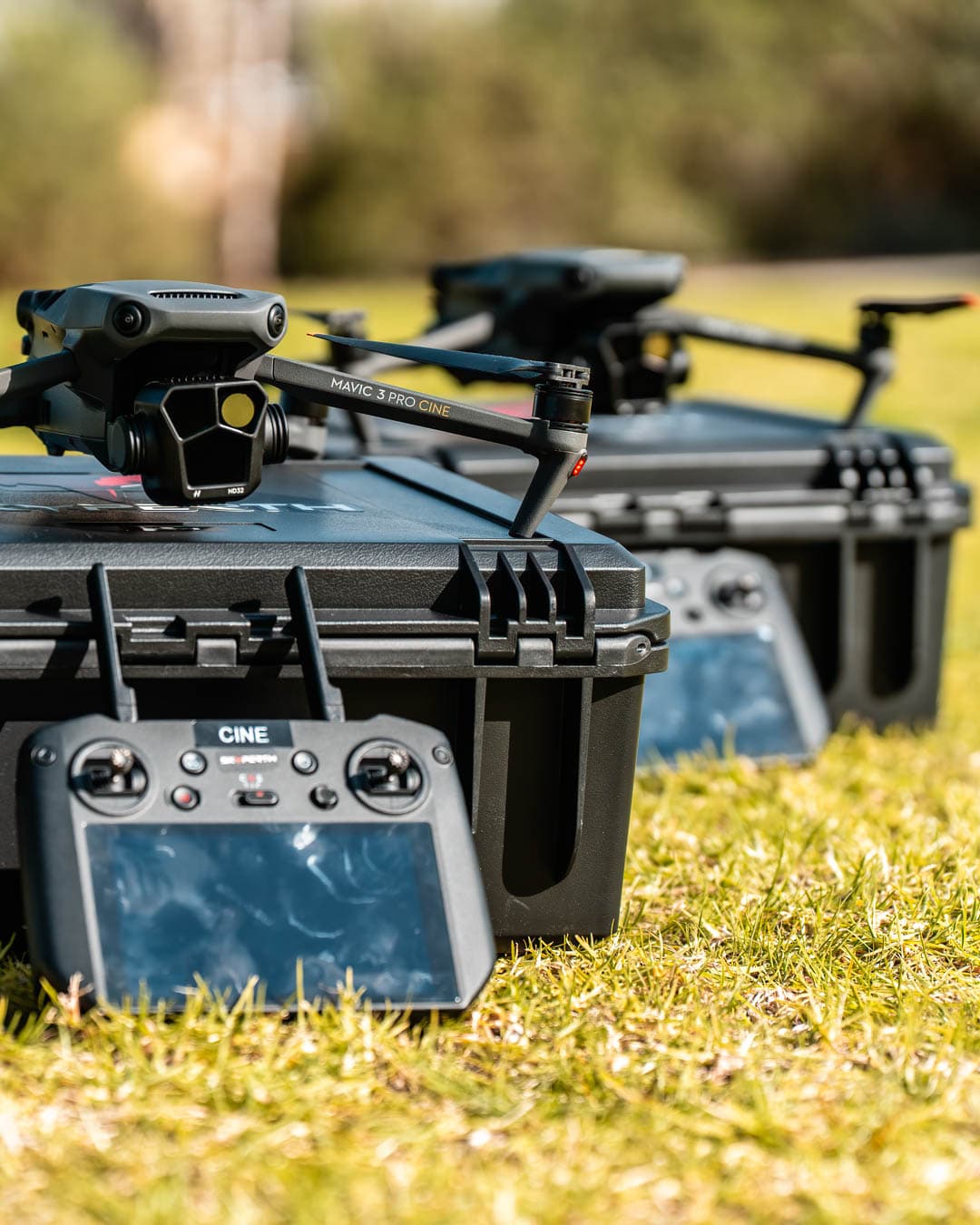
We never arrive at an industrial site with a single drone. Our standard deployment includes a primary aircraft configured for the specific job requirements and at least one backup aircraft of equivalent capability. If the primary develops a fault, sensor error, gimbal issue, or any anomaly, we switch to the backup without losing the operational window.
This is not just about having a spare drone in the car. The backup is configured, calibrated, and pre-flighted before the operation begins. If we need to switch, it is airborne within minutes, not the 30 to 45 minutes it would take to configure a backup from scratch. In maritime operations where events happen on a fixed schedule, having a ready backup is the difference between capturing the moment and explaining why you missed it.
Battery and Power Management
Battery failure is one of the most common causes of drone incidents. Cells degrade over time, cold weather reduces output, and manufacturing defects can cause sudden failures. We manage this risk through rigorous battery lifecycle tracking, conservative replacement schedules, and always carrying more batteries than the mission requires.
Every battery in our fleet has a logged history of charge cycles, observed capacity, and performance notes. Batteries that show any degradation, voltage inconsistency, or physical anomaly are retired immediately. We do not push batteries to their limits. Our operational floor is 30% remaining capacity, higher in cold weather or over-water operations where an emergency landing has no safe outcome.
Data and Communication Redundancy
Data loss on an industrial project is unacceptable. We record to dual media where possible, using both internal storage and external recording devices. SD cards are never reused without full testing. After each flight, footage is backed up to a portable drive before the next flight begins. At the end of the shoot, three copies of all data exist: the original media, the on-site backup, and a cloud upload initiated before we leave the location.
Communication systems also have redundancy built in. If the primary controller link fails, the aircraft executes its programmed return-to-home automatically. We carry backup controllers configured for each aircraft. And our crew communication, between pilot, observer, and ground coordinator, uses both radio and direct line-of-sight voice contact.
The Protocol in Practice
Before every industrial operation, we run through a redundancy checklist that verifies every backup system is ready. Primary and backup aircraft tested. Batteries charged and verified. Data storage confirmed and backed up. Communication systems checked. Emergency procedures reviewed with the crew. This process adds 30 to 45 minutes to our setup time but eliminates the scenarios that cause failures, delays, and damage.
In nine years of commercial operations across mining, maritime, and industrial sites, we have deployed backup equipment multiple times. Each time, the redundancy protocol ensured the mission was completed without incident, delay, or compromise to safety. The protocol pays for itself every time it activates. Explore our services or get in touch to discuss reliable aerial operations for your industrial site.