Where Drone Technology Is Heading
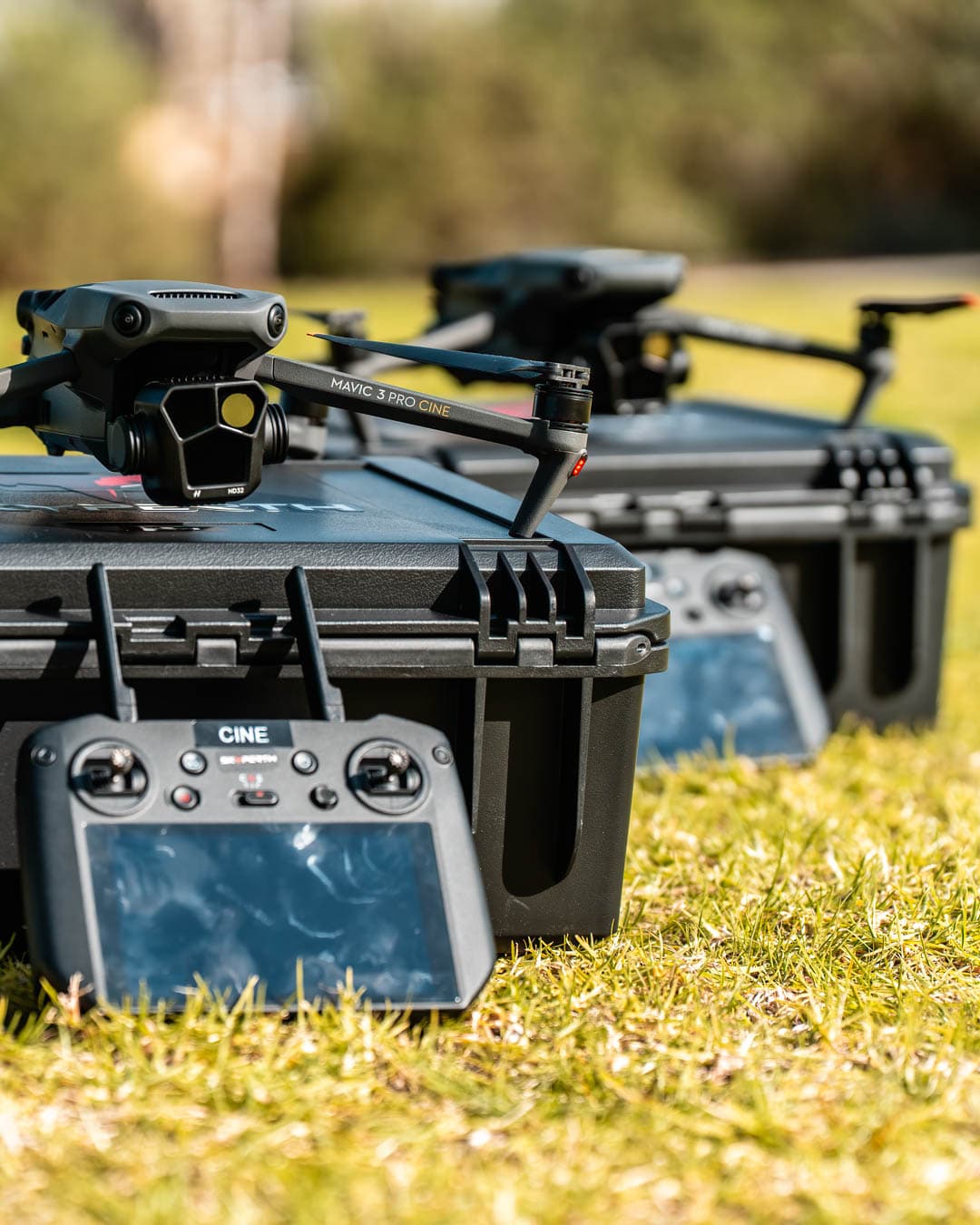
The drone industry has evolved faster than almost anyone predicted. Ten years ago, consumer drones were novelty gadgets with five-minute battery lives and cameras that produced footage barely usable for YouTube. Today, professional platforms shoot 8K RAW video, fly autonomously using AI-driven waypoint missions, and carry payloads that include thermal cameras, LiDAR sensors, and multispectral imaging systems.
The next decade promises even more dramatic shifts. Longer flight times, better sensors, tighter integration with AI, and expanded regulatory frameworks will push drones deeper into industries that have barely started to adopt them. Here is what I see coming after nine years in the commercial drone space.
Battery Technology and Flight Endurance
Battery limitations remain the single biggest constraint on drone operations. Most commercial platforms deliver 30 to 45 minutes of flight time. That sounds adequate until you factor in takeoff, positioning, landing reserves, and the impact of wind and payload on consumption. Real usable flight time on a typical commercial shoot is 20 to 30 minutes per battery.
Solid-state batteries and hydrogen fuel cell systems are in active development. DJI's Dock 2 system already enables automated battery swapping for continuous operations without a pilot on-site. Several manufacturers are testing hybrid power systems that combine battery electric motors with small combustion generators for extended range. Within five years, two-hour flight times on mid-size commercial platforms are realistic.
Longer endurance changes the operational model. Instead of planning shoots around battery cycles, operators will plan around the creative or data requirements of the job. Continuous flight opens up applications like long-duration surveillance, extended area surveys, and real-time event coverage that current battery limits make impractical.
Artificial Intelligence and Autonomous Operations
AI is already embedded in modern drones. Obstacle avoidance, subject tracking, and automated flight paths all use machine learning. But current implementations are relatively simple. The drone follows rules. It does not make creative or strategic decisions. That is changing.
Next-generation AI systems will enable drones to assess a scene and adjust their flight path, altitude, and camera settings to capture the best possible imagery without human input. Imagine launching a drone at a construction site and having it autonomously identify the most informative angles, detect changes since the last survey, and generate a progress report with annotated images. The technology to do this exists in labs today.
For creative applications, AI will augment rather than replace human operators. Automated stabilisation, intelligent framing, and real-time colour optimisation will make good pilots better. But the creative vision, the ability to see a story and know how to tell it, remains a human skill. We explore this balance in our article on whether AI can replace human pilots.
Regulatory Evolution: BVLOS and Urban Airspace
CASA and equivalent regulators worldwide are working to expand beyond visual line of sight (BVLOS) permissions. Currently, most commercial drone operations require the pilot to maintain direct visual contact with the aircraft. BVLOS approvals are granted on a case-by-case basis and involve extensive safety documentation.
The move towards routine BVLOS operations will unlock applications in infrastructure inspection (power lines, pipelines, rail corridors), agricultural monitoring over large properties, and emergency response in bushfire or flood scenarios. Australia's vast geography makes BVLOS particularly valuable here. Inspecting a 500-kilometre pipeline segment by sending autonomous drones along the route is dramatically more efficient than deploying helicopters or ground crews.
Urban air mobility, including drone delivery and eventually air taxis, will require entirely new airspace management systems. The concept of Urban Traffic Management (UTM) is being developed to handle thousands of simultaneous low-altitude drone flights in metropolitan areas. This is years away from routine operation, but the foundations are being built now.
What This Means for Businesses
The practical takeaway for businesses is straightforward. Drone technology is not a fad. It is infrastructure. Companies that integrate aerial capabilities into their operations now will be better positioned to adopt next-generation tools as they mature. The data pipelines, safety systems, and operational experience you build today become the foundation for tomorrow's autonomous and AI-enhanced operations.
Whether you are in mining, maritime, construction, real estate, or creative content, the question is not whether drones will become essential to your industry. It is whether you will be an early mover or playing catch-up. Explore our services to see how we help businesses build aerial capability today.