The Short Answer: Yes, But With Conditions
Flying a drone at night in Australia is legal, but it comes with stricter requirements than daytime operations. Whether you are a recreational flyer or a commercial operator, the Civil Aviation Safety Authority (CASA) sets clear rules about night flights. Breaking them carries serious penalties, including fines and potential criminal charges if you endanger other aircraft.
The rules differ depending on your certification level and the type of operation. Recreational pilots face tighter restrictions than certified commercial operators. And specific locations, particularly near airports, helipads, and controlled airspace, add additional layers of approval. Here is what you need to know before you launch after sunset.
Recreational Drone Pilots: What You Can and Cannot Do
If you are flying recreationally under CASA's standard rules, night flying is technically permitted. But you must maintain visual line of sight (VLOS) at all times. At night, that becomes extremely difficult. Your drone's position lights help, but once it reaches 100 metres altitude or moves a few hundred metres away, distinguishing orientation becomes unreliable. The moment you lose clear visual reference of your drone, you are in breach.
CASA also requires you to stay below 120 metres (400 feet) AGL, keep at least 30 metres from other people, and never fly over populated areas. These rules apply day and night. At night, the risk of misjudging distance from obstacles, power lines, and terrain increases significantly. If you are new to flying, gain experience in daylight before attempting night operations.
Anti-collision strobes are not mandatory for sub-250g recreational drones, but they are strongly recommended. A bright strobe makes your drone visible to other aircraft and helps you maintain orientation. Spend the $30. It is cheap insurance.
Commercial Operators: CASA Certification and Night Ratings
Certified commercial operators (ReOC holders) can conduct night operations, but your Operations Manual must include specific procedures for night flying. This covers risk assessments, crew requirements, lighting equipment, and site-specific planning. You cannot simply decide to fly a commercial job at night without having the appropriate documentation and approvals in place.
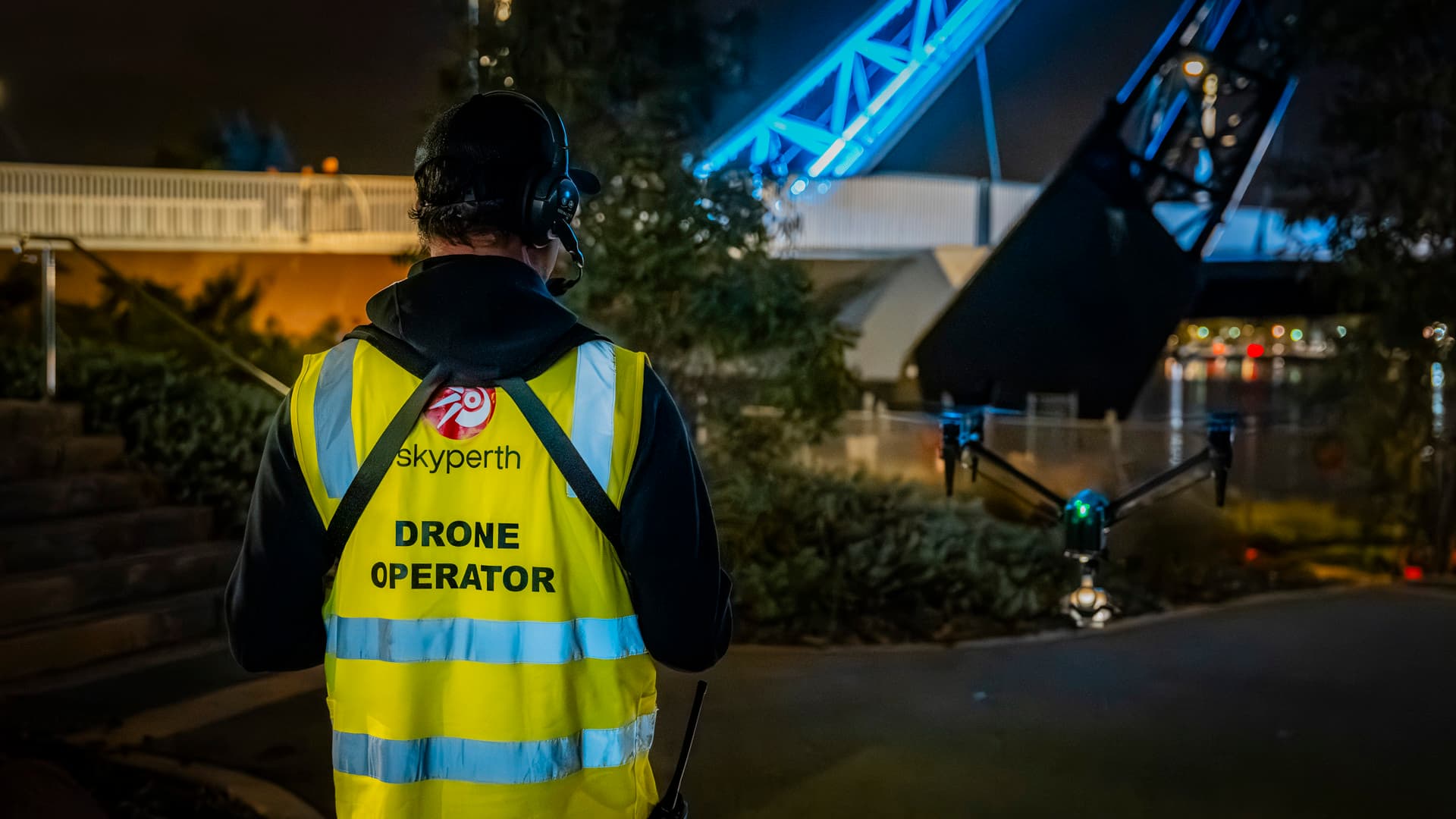
For most commercial night operations, you will need a crew. A pilot and at least one observer is standard practice. The observer maintains visual contact with the drone while the pilot focuses on the screen and controls. On our maritime projects, night operations often involve vessel lighting that creates complex visual environments. Having a dedicated observer is not just a CASA requirement. It is a safety necessity.
If your operation requires flying beyond visual line of sight (BVLOS) at night, you need specific CASA approval. These applications are assessed case by case and require detailed safety cases, risk mitigation strategies, and often restricted airspace arrangements.
Technical Considerations for Night Drone Photography
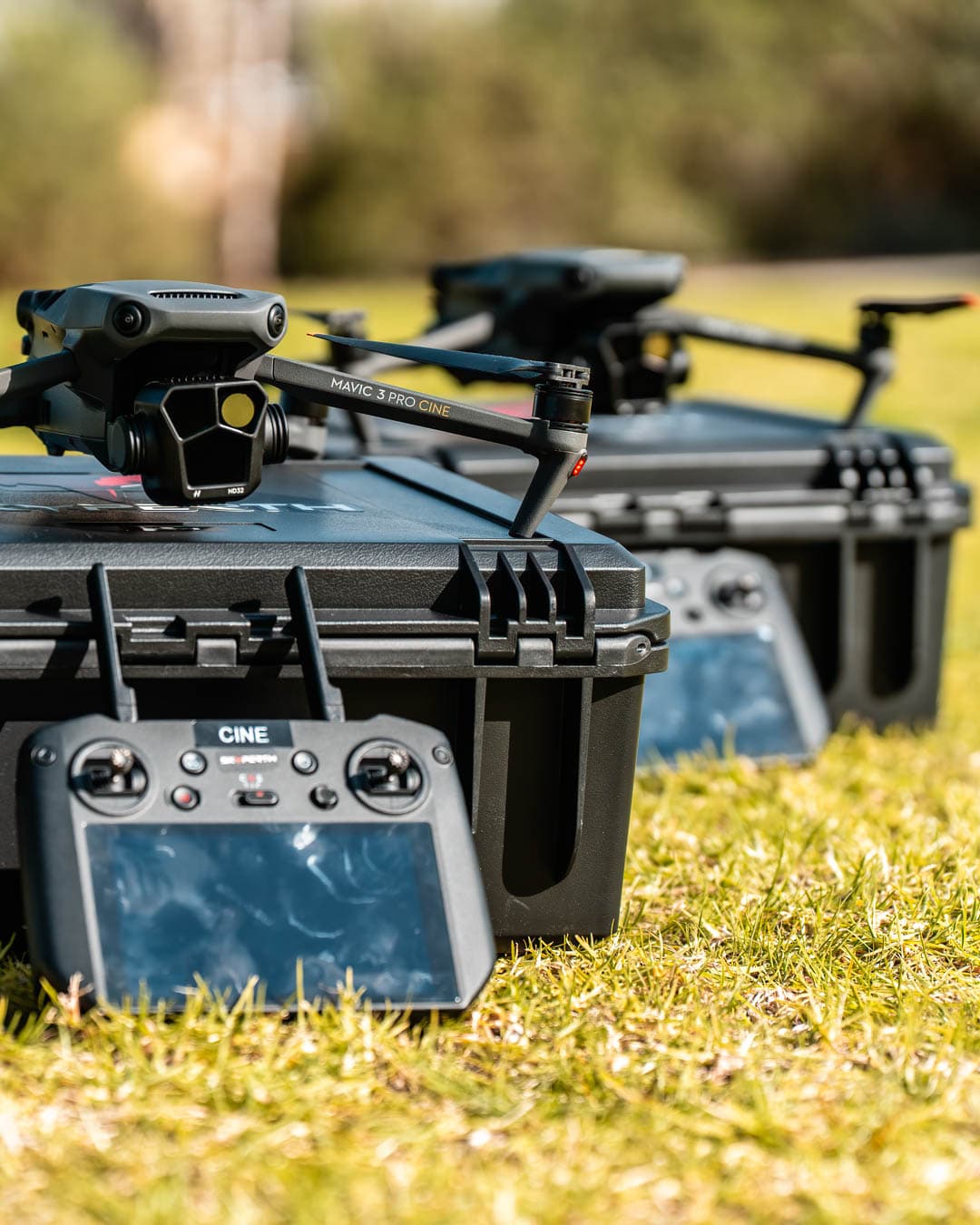
Capturing usable images and video at night demands more from your camera system. You need a drone with a large sensor, manual exposure control, and the ability to shoot in RAW format. The DJI Mavic 3 Pro and Inspire 3 handle low-light conditions well. Smaller-sensor drones produce noisy, unusable footage once ambient light drops below a certain threshold.
Long exposure photography from a drone is possible but requires perfectly calm conditions. Even slight wind causes micro-movements that blur long exposures. Hyperlapse and timelapse modes work better, as the software compensates for minor positioning drift between frames. Night timelapses of city skylines, traffic flows, and industrial sites can be genuinely spectacular.
For video work, you will need to push ISO higher than in daylight. Understanding your drone's usable ISO range is critical. The Mavic 3 series stays clean up to about ISO 1600. Beyond that, noise becomes visible. The Inspire 3's full-frame sensor extends that ceiling to around ISO 3200 before quality degrades noticeably.
Planning a Night Flight: Practical Steps
Scout your location during daylight first. Identify obstacles, power lines, trees, buildings, and terrain changes that will be invisible at night. Mark your takeoff and landing zone with ground lighting. A simple set of LED markers creates a reliable reference point when everything else disappears into darkness.
Check the weather forecast carefully. Wind is harder to judge at night without visual cues like tree movement. Cloud cover affects ambient light levels. A full moon on a clear night provides surprisingly usable illumination compared to an overcast, moonless sky.
File your flight plan if operating near controlled airspace. Use the CASA-approved OpenSky app or the Australian airspace map to verify restrictions. Some areas that are unrestricted during the day become active military or emergency zones at night. Always check NOTAMs (Notices to Air Missions) for temporary restrictions.
For more on flight preparation and safety protocols, read our guide on pre-flight and on-set best practices. And if you need professional night aerial content for your project, get in touch to discuss what is achievable within CASA regulations.