Listening to the Landscape
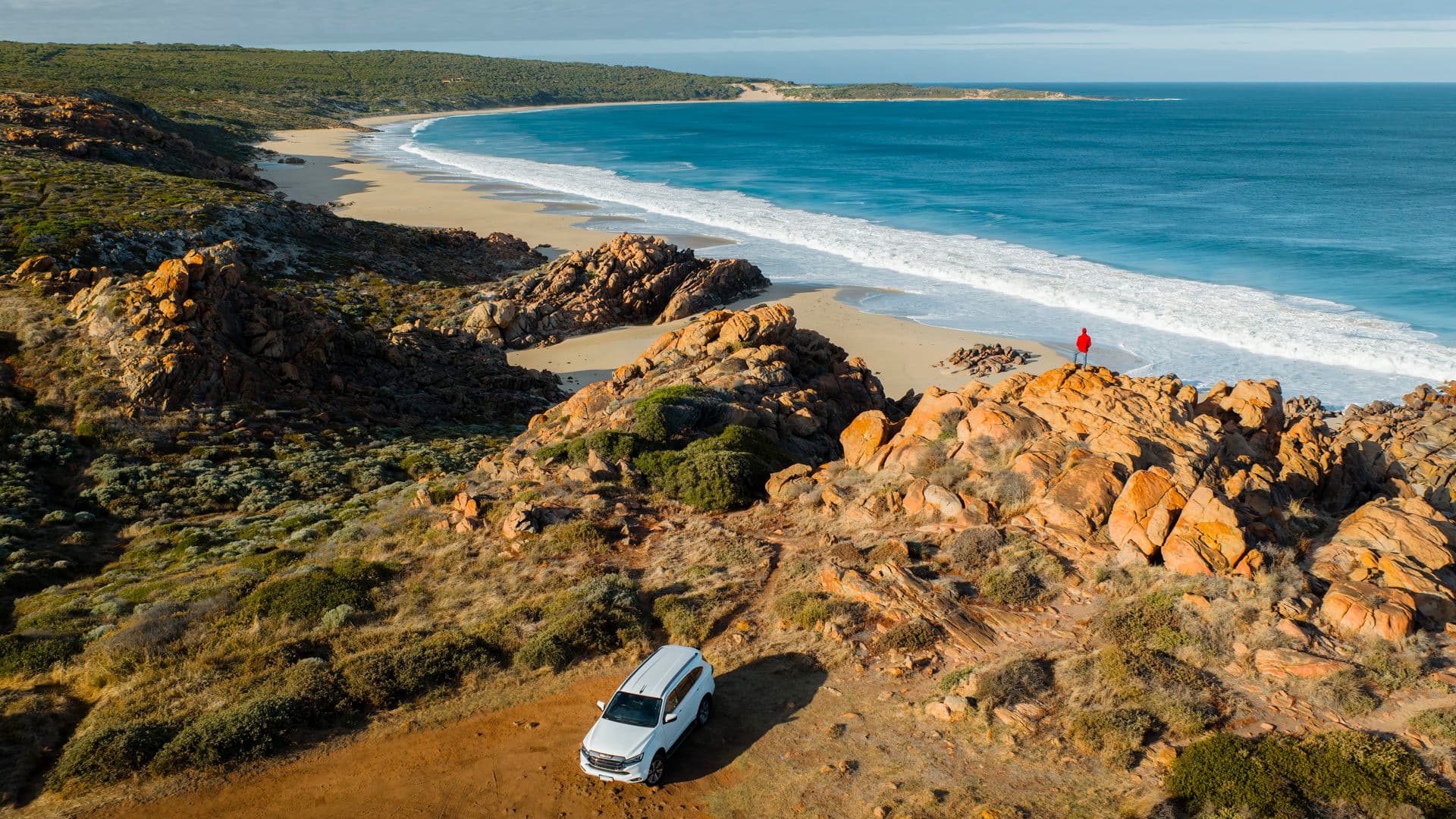
There are places along the Western Australian coastline that communicate something words struggle to capture. The raw intersection of ancient rock and relentless ocean. The isolation of a beach that stretches to the horizon with no footprints. The colour of water over limestone reef that shifts through ten shades of blue within a single cove. These places do not need narration. They speak for themselves. The drone simply gives them a voice loud enough for everyone to hear.
Aerial photography of the coast is not about documentation. It is about translation. The feeling of standing on a cliff edge, looking down at swirling water 60 metres below, does not transfer through a ground-level photograph. But from a drone positioned at that cliff's height, looking along the coastline as it bends toward the horizon, the scale and drama of that moment becomes accessible to anyone viewing the image.
The Geology Written from Above
Western Australia's coastline is ancient. The Zuytdorp Cliffs, the Kalbarri formations, the Kimberley sandstone, the Nullarbor limestone. Each section of coast tells a geological story spanning hundreds of millions of years. From altitude, the layering, folding, and erosion patterns that geologists study become visible to everyone. The coast becomes a textbook written in rock and water.
Aerial photography reveals erosion processes in real-time. Wave-cut platforms, sea stacks, and collapsed cave systems all show the ongoing conversation between ocean and land. Documenting these features from the air creates records that have scientific, educational, and conservation value alongside their aesthetic appeal.
Colour as Communication
The colour palette of the Western Australian coast from above is unlike anywhere else. The deep indigo of the open ocean. The impossible turquoise of shallow reef water. The rust red of Pilbara rock meeting the sea. The white sand that glows against dark water. These colours are not enhanced in post-production. They are real, and they are extraordinary.
Capturing these colours accurately requires careful exposure management and colour-correct processing. The human eye perceives water colour differently from a camera sensor. Getting the turquoise of Ningaloo or the emerald of Esperance to look as vivid in a photograph as it does in person requires shooting in RAW, using accurate white balance, and understanding how different colour profiles render blue and green tones.
The Stories Between the Headlands
Each bay along the coast has a character shaped by its geography. A sheltered cove with calm, clear water tells a different story than an exposed headland taking the full force of the Indian Ocean. From above, you can read these stories in the wave patterns, the sand movement, the vegetation line, and the evidence of human use or absence.
Some of the most compelling coastal aerial photographs come from transition zones. Where reef meets sand. Where river meets ocean. Where rock gives way to beach. These boundary areas create visual tension and compositional interest that single-texture environments lack. Seek out these transitions for your strongest images.
Respecting the Places That Speak
Not every coastal location should be promoted or even named publicly. Some places remain relatively untouched specifically because they are not widely known. As aerial photographers, we have a responsibility to balance our desire to share beautiful imagery with respect for the places that produce it. Geotagging sensitive locations on social media drives traffic that can damage fragile environments.
We share our coastal work in our portfolio with this balance in mind. The images celebrate the coast without necessarily revealing exact locations. If you want to experience the Western Australian coastline through aerial perspectives, get in touch. We can guide you to locations that are both stunning and appropriate for drone operations under CASA regulations.