Composition Rules Apply at Every Altitude
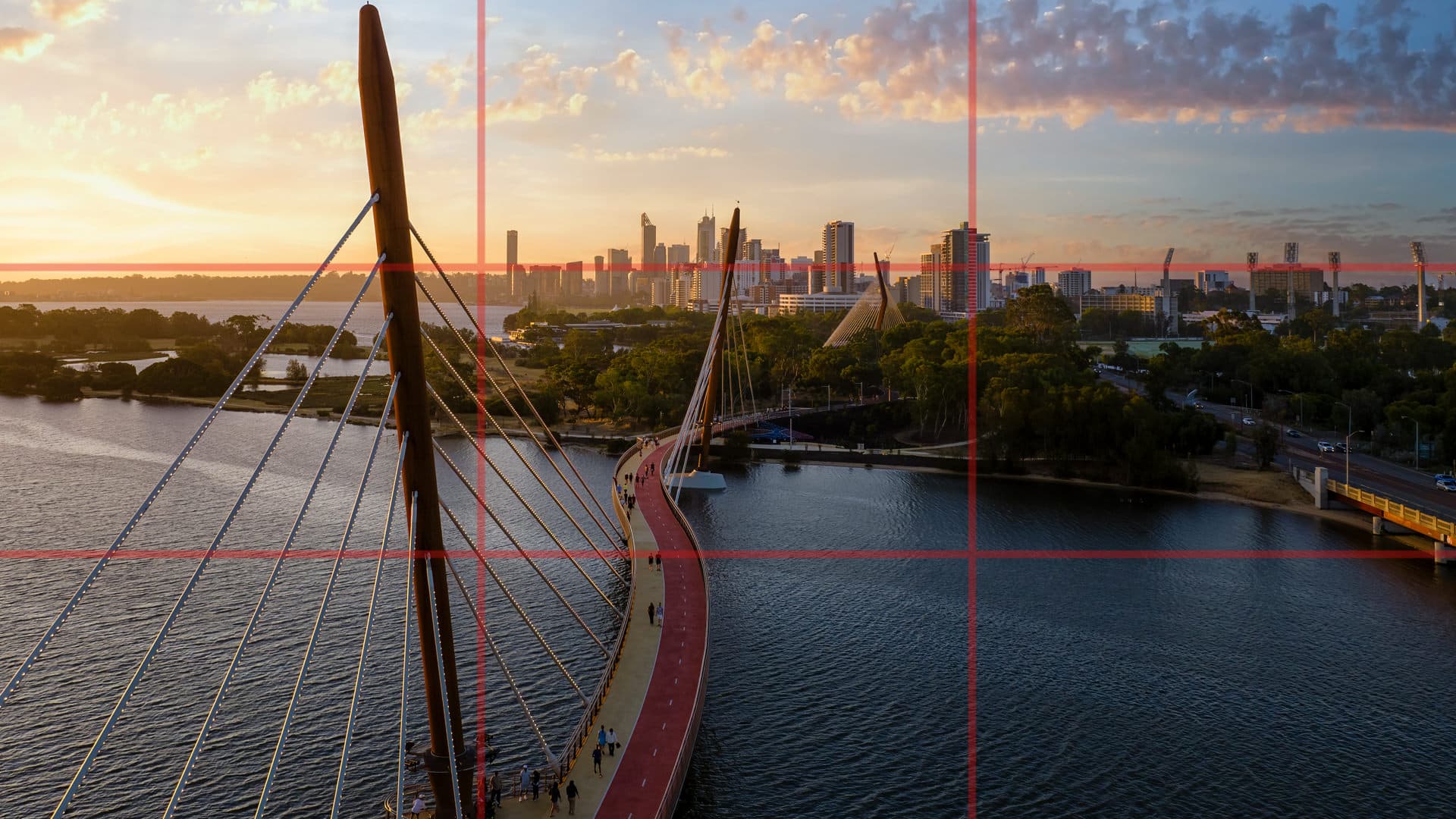
The principles of good composition do not change because you are shooting from 100 metres. Rule of thirds, leading lines, symmetry, foreground interest, and negative space all apply to aerial photography exactly as they do to ground-level work. The difference is that your canvas is larger, your subject relationship changes dramatically with small altitude adjustments, and the top-down perspective creates patterns and textures that do not exist at eye level.
Most beginner drone photographers make the same mistake. They fly up, point the camera down, and shoot. The resulting images are flat, disorienting, and lack a clear subject. Great aerial composition requires the same intentional framing that any skilled photographer brings to their work. You need to know what you are photographing, why, and how the viewer's eye should move through the frame.
The Power of Oblique Angles
Top-down (nadir) shots have their place. They are excellent for mapping, surveying, and creating abstract pattern images. But for storytelling and commercial content, oblique angles between 30 and 60 degrees from horizontal are far more effective. These angles preserve the three-dimensionality of your subject. Buildings have depth. Landscapes have layers. Vehicles have form rather than appearing as coloured rectangles.
An oblique angle at 45 degrees also allows you to include both foreground and background elements, creating depth in the frame. A coastal shot at this angle might include the beach in the foreground, the breaking waves in the middle ground, and the ocean stretching to the horizon. Each layer adds context and visual interest that a straight-down shot would compress into a flat pattern.
Experiment with your gimbal angle during flight. Small adjustments between 20 and 60 degrees produce dramatically different compositions from the same position. The best aerial photographers constantly adjust their gimbal angle as they move through a scene, looking for the angle that best reveals the story of the subject.
Leading Lines from Above
From altitude, the world is full of leading lines that are invisible from the ground. Roads, rivers, fences, shorelines, shadows, and architectural features all create natural paths that guide the viewer's eye through the frame. The best aerial compositions use these lines deliberately, positioning the drone so that a road curves into the frame and leads toward the subject, or a river creates a diagonal that adds dynamic energy.
Shadows are particularly powerful leading lines in aerial photography. Low sun creates long shadows from buildings, trees, and terrain features. These shadows can be more visually dominant than the objects casting them. Early morning and late afternoon flights produce the strongest shadow patterns. Midday flying with the sun directly overhead eliminates shadows almost entirely, which can be useful for mapping but is usually unflattering for creative work.
Scale and Context: The Aerial Advantage
The unique power of aerial photography is its ability to show subjects in context. A house is not just a building. It is a building in a neighbourhood, near a park, two streets from the beach. A ship is not just a vessel. It is a vessel in a dock, surrounded by cranes, with a city behind it. This contextual storytelling is what makes aerial photography commercially valuable.
Use altitude strategically to control how much context appears in your frame. Low altitude (10-30 metres) isolates the subject with minimal context. Medium altitude (30-80 metres) shows the immediate surroundings. High altitude (80-120 metres) provides broad context including the wider landscape. Moving through these altitude ranges during a single sequence creates a reveal that draws the viewer from intimate detail to expansive overview.
Practise With Purpose
Improving your aerial composition requires deliberate practice, not just flying hours. Before each flight, decide what compositional technique you are going to focus on. Leading lines. Symmetry. Pattern and texture. Depth layering. Focus on one technique per session and review your results critically afterward.
Study the work of photographers and cinematographers you admire. Not just drone operators. Ground-level composition masters like Steve McCurry, cinematographers like Roger Deakins, and landscape photographers like Ansel Adams all understood principles that translate directly to aerial work. The medium is different. The fundamentals are universal. Explore our portfolio for examples of aerial composition applied across commercial projects, and get in touch if you need compelling aerial imagery for your next project.