A New Perspective on Live Sport
Sports broadcasting was one of the first industries to adopt professional aerial cinematography. Helicopter cameras have been a staple of major sporting events for decades. But the cost, noise, and logistical complexity of helicopter operations limited aerial coverage to premium events. Drones changed the equation. They offer similar perspectives at a fraction of the cost, with less noise, lower risk, and greater flexibility.
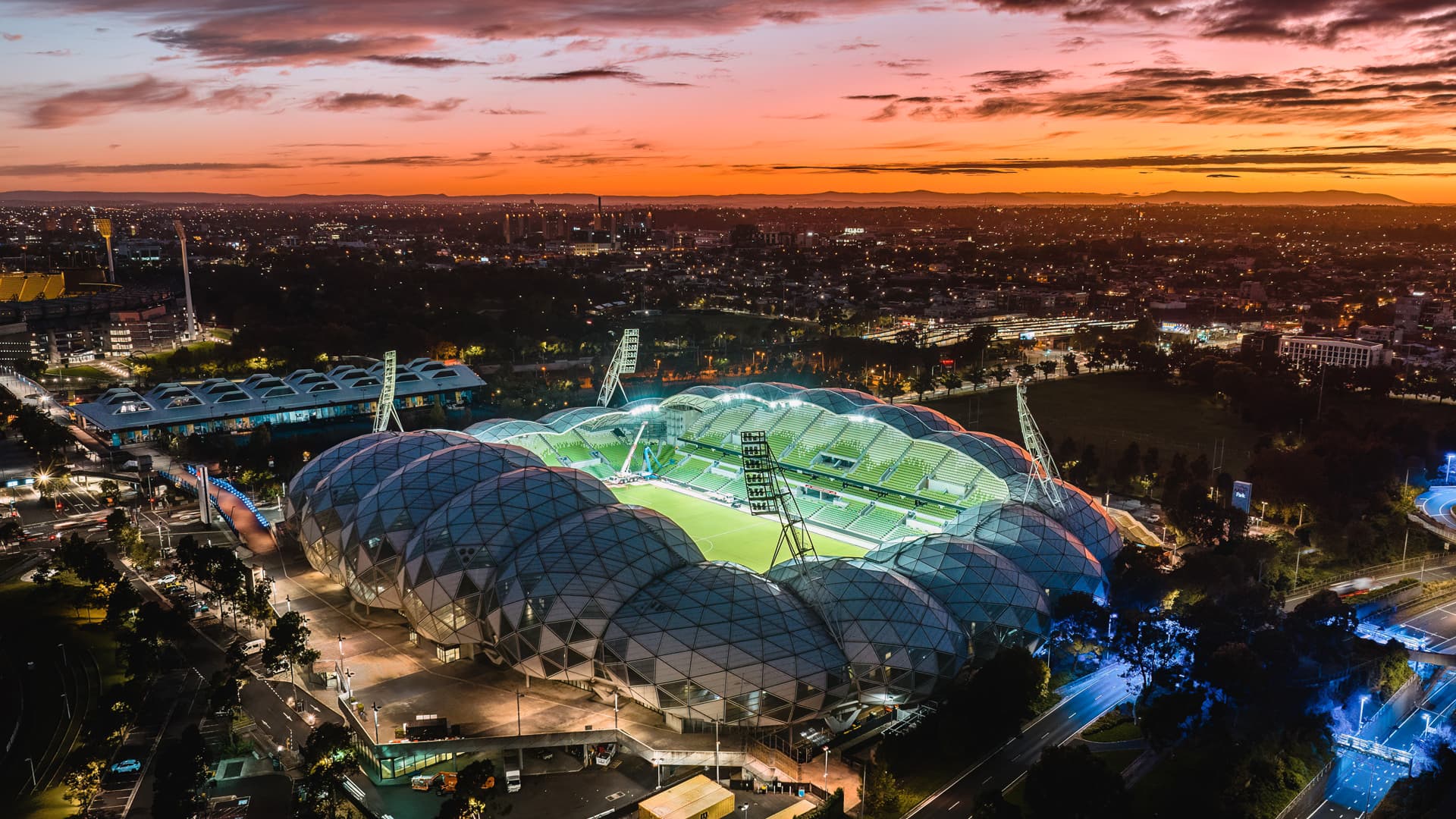
Today, drone cameras are standard equipment at cycling races, triathlons, surfing competitions, motorsport events, golf tournaments, and outdoor athletic events. The footage they produce has become so integrated into sports coverage that audiences barely notice the transition from ground-level to aerial perspective. That seamless integration is a sign of how mature the technology has become.
What Drones Bring to Sports Coverage
The primary advantage of drones in sports broadcasting is perspective flexibility. A drone can follow a cyclist through a winding course, revealing the terrain, the crowd, and the competitive dynamics in a single shot. It can pull up from a rugby scrum to show the tactical positioning of both teams. It can track a surfer from paddling out to riding a wave, maintaining framing that would be impossible from shore or from a helicopter at altitude.
Speed of deployment is another advantage. A helicopter requires pre-arranged flight paths, coordination with air traffic control, and significant lead time. A drone can be airborne in minutes, repositioned in seconds, and landed immediately if conditions change. For events where weather, scheduling, or safety conditions are dynamic, that flexibility is invaluable.
FPV drones have added a new dimension to sports coverage. The immersive, low-altitude, high-speed footage from FPV platforms creates a viewer experience that feels like flying through the event. Chase sequences alongside cyclists, dive-throughs in stadium environments, and high-speed tracking of motorsport vehicles all use FPV techniques that standard drones cannot replicate.
Technical Challenges in Sports Aerial Coverage
Flying drones at sporting events introduces specific challenges. Crowds create no-fly zones under CASA regulations. Athletes in motion require sophisticated tracking and framing skills. Live broadcast integration demands real-time video transmission with minimal latency. And the pressure of a live event leaves zero margin for technical failures.
Safety is the non-negotiable priority. A drone failure over a stadium full of spectators is a catastrophic scenario. Operators working in sports broadcasting use redundant systems, tethered drones where appropriate, and extensive pre-event safety planning. The operator's CASA certification, insurance coverage, and safety track record are scrutinised heavily by event organisers and broadcasters.
Beyond Live Coverage: Content and Marketing
Drone footage from sporting events extends well beyond the live broadcast. Highlight reels, sponsor activation content, social media clips, and event marketing materials all use aerial perspectives. For event organisers, the aerial footage from a single event can generate marketing content that drives ticket sales and sponsorship value for the following year.
We have documented events like the MACA Ride 200 where the aerial coverage captured the scale and spirit of the event in ways that ground cameras could not. That content served the event's marketing, the sponsors' communication needs, and the broader cycling community for months after the event.
The Future of Aerial Sports Coverage
As drone technology improves, expect to see more integrated and immersive sports coverage. Multiple synchronised drones providing simultaneous angles. AI-powered camera systems that track athletes automatically. Real-time 3D mapping of course conditions for broadcast graphics. The combination of drone capability and AI processing will create sports viewing experiences that today's audiences cannot imagine.
If you are organising a sporting event and want aerial coverage that captures the full story, explore our event portfolio or get in touch to plan your coverage.