It Starts Before the Drone Leaves the Case
Our production process begins with understanding. Understanding the client's business, their audience, their objectives, and the specific outcomes they need from the content. A discovery call that covers these fundamentals shapes every decision that follows, from equipment selection to shot planning to post-production style. Without this step, you are just pointing a camera at things and hoping something works.
This front-end investment is what separates professional production from amateur capture. Anyone can fly a drone and press record. Creating content that serves a business purpose requires strategic thinking before the blades spin. We typically spend as much time on pre-production planning as we do on the shoot day itself.
Pre-Production: Planning Every Detail
Once we understand the brief, we build a production plan. This includes location scouting (physical visits or satellite imagery review), shot list development, equipment allocation, crew assignments, and scheduling around optimal lighting conditions. For aerial work, we add airspace checks, CASA notification or approval applications, weather contingency planning, and risk assessments.
The shot list is the most important pre-production document. It specifies every shot we plan to capture, the equipment we will use, the approximate altitude and angle, and the purpose each shot serves in the final edit. Clients receive and approve this list before the shoot day. This eliminates surprises, ensures alignment, and provides a clear checklist that keeps the shoot efficient and focused.
For complex projects, we create storyboards or mood boards that visualise the intended look and feel. These references help clients understand what they are commissioning and give our crew a shared creative vision to work toward. The more clarity we build in pre-production, the smoother the shoot day runs.
Production Day: Efficiency Through Preparation
Shoot days are where preparation meets execution. We arrive early, conduct site assessments, brief the crew, and complete pre-flight checks before the optimal light window opens. Every minute on-site is planned. We work through the shot list systematically, capturing essential shots first and creative experiments later.
For aerial work, we typically fly in 20 to 25 minute sessions, each battery cycle aligned with specific shots from the list. Between flights, we review captured footage on-site to confirm we have what we need. Discovering a missed shot or a technical issue after leaving the location costs time and money. On-site review eliminates that risk.
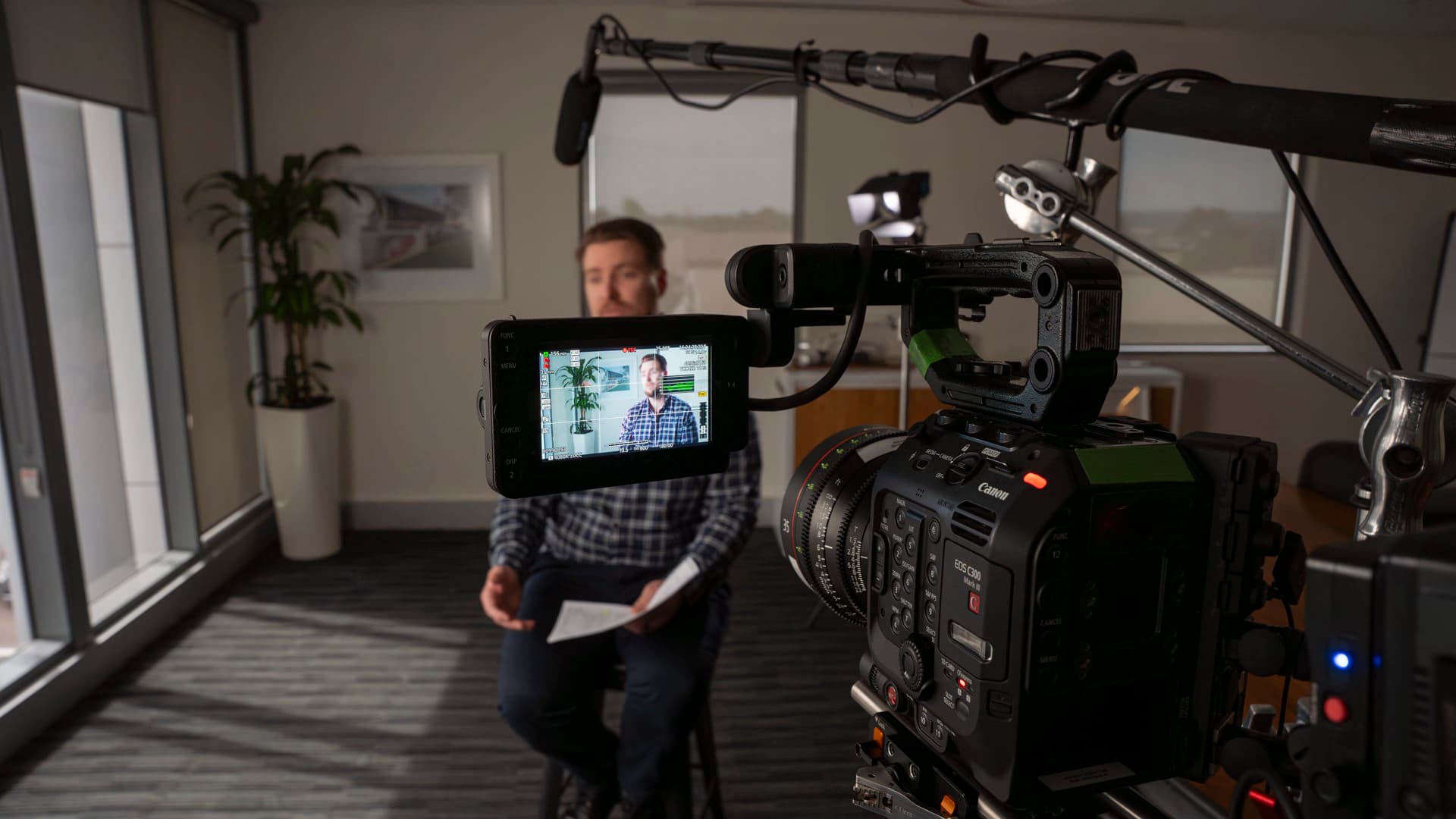
Ground-level coverage runs concurrently where crew size allows. While the drone captures establishing and scale shots, a ground camera operator captures detail work, interviews, or behind-the-scenes content. This parallel workflow maximises the output from each production day.
Post-Production: Where Content Becomes Communication
Raw footage returns to our edit suite where the real transformation begins. Footage is ingested, organised, and backed up immediately. Selects are pulled from each flight and ground session. The edit begins with structure, building the narrative arc that was defined in pre-production.
Colour grading, sound design, music selection, and graphics are layered in progressively. Each element serves the story. The colour grade sets the mood. The music drives the pacing. Graphics provide context or branding. Sound design creates presence and atmosphere. None of these elements are afterthoughts. They are integral parts of the communication design.
Clients receive a review cut for feedback before final delivery. Typically, two rounds of revisions are included in our project scope. Clear communication during the review process ensures feedback is specific and actionable, leading to a final product that meets the brief precisely.
Delivery and Beyond
Final deliverables are exported in formats specified during the planning phase. Web-optimised versions for online use. High-resolution masters for broadcast or print. Platform-specific edits for social media. Each format is quality-checked before delivery. We maintain archived masters for future use, so clients can request re-edits or additional formats without re-shooting.
The production process does not end at delivery. We follow up with clients to understand how the content performed against their objectives. This feedback loop informs how we approach their next project and continuously improves our process. Explore our portfolio to see the results of this process across diverse projects, or get in touch to discuss your next production.